Winter pests damage Arizona trees. Learn to spot bug signs, protect your trees, and get professional help today.
Table of Contents
- What Pests Attack Trees in Winter
- Common Winter Pests in Arizona
- Signs Your Tree Has Winter Pests
- Why Winter Makes Trees Vulnerable
- Winter Rain Makes Arizona Soil Soft
- How to Protect Your Trees from Pests
- Prevention Steps You Can Take Now
- Professional Pest Treatment Options
- When to Call an Expert Arborist
- FAQs
- Protect Your Trees This Winter
- Start Your Tree Protection Today
What Pests Attack Trees in Winter
Winter brings insects that hide inside trees to stay warm. These bugs don’t sleep as other animals do in cold months. Instead, they burrow into bark and wood to survive freezing temperatures.
Tree pests feed on bark, wood, and sap all winter long. They create tunnels and galleries that weaken branches and trunks. One pest becomes many pests within weeks without professional treatment.
Different pests attack different tree types in Arizona landscapes. Some pests only appear in winter while others stay active year-round. Understanding which pests threaten your specific trees helps you protect them better.
Winter pests multiply quickly inside trees when conditions are right. They reproduce faster in stressed or weakened trees. Early detection stops infestations before they cause serious damage.
Pest damage weakens trees and makes them sick and vulnerable. Damaged trees cannot fight off disease and other problems. Professional pest control protects your investment from permanent loss.
Your trees need protection during winter months most of all. Cold stress weakens trees and makes them pest targets. Taking action now prevents expensive tree removal later.
Common Winter Pests in Arizona
Bark beetles tunnel under tree bark and create visible damage patterns. These small insects cut off water and nutrient flow inside trees. Arizona experiences major bark beetle problems during winter months.
Borers are long, thin insects that drill deep into wood. They create tunnels that weaken branches and trunks significantly. Borer damage causes branches to fall and trees to become unstable.
Scale insects look like small bumps on branches and trunks. They suck juice from trees and weaken them gradually. Heavy infestations can kill entire branches or whole trees.
Mites are tiny spider-like creatures that feed on tree leaves. They create yellowing and spotting on foliage throughout winter. Heavy mite populations cause leaf drop and branch dieback.
Aphids are small, soft-bodied insects that cluster on branches. They suck plant juice and weaken trees gradually over time. Aphid droppings create sticky residue on leaves and branches.
Psyllids are jumping insects that damage tree leaves and twigs. They hide under leaves and feed on plant juices. Psyllid infestations cause yellowing and premature leaf drop.
Signs Your Tree Has Winter Pests
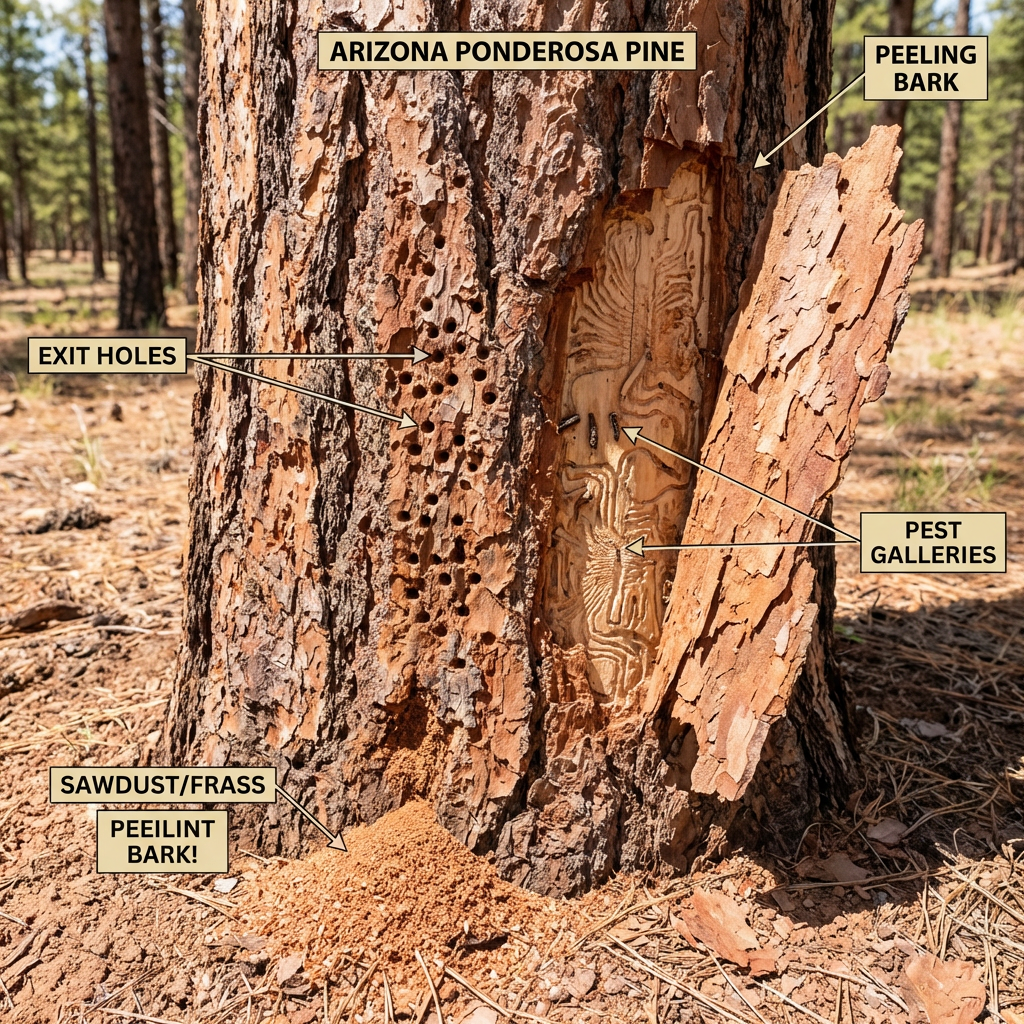
Look for small holes in bark where pests enter and exit. Sawdust or frass (pest droppings) appears around holes and cracks. Bark may peel away, showing galleries or pathways underneath.
Branches turn brown or yellow without an obvious reason or cause. Leaves wilt even when the soil has plenty of moisture. Branch tips die back gradually from the ends inward.
Trees push out sap to protect against pest damage and invasion. Sticky residue appears on trunks and branches throughout the tree. Sap flow indicates the tree is fighting pest invasion actively.
Trees lose leaves prematurely during the growing season without explanation. Branches appear sparse compared to previous years of growth. Overall, the tree shape becomes thin and weak-looking over time.
You see insects crawling on bark or branches regularly. Flying insects swarm around the tree during warm days. Insect droppings appear on leaves and the ground below trees.
New growth appears stunted and weak compared to normal. Trees don’t leaf out fully in spring season. Growth is much less than normal for that tree species.
Why Winter Makes Trees Vulnerable
Cold temperatures stress trees and weaken their natural defenses. Frozen or damaged trees cannot defend themselves against pest invasion. Healthy trees produce chemicals that repel pests naturally and effectively.
Winter cold weakens tree defenses against pest invasion completely. Trees focus energy on survival rather than pest protection. This makes stressed trees perfect homes for winter pests.
Frost damage from cold snaps creates entry points for pests. Cracks in bark allow insects to tunnel inside easily. Damaged trees attract pests because they’re easier targets.
Dehydration from dry winter air weakens trees significantly. Trees cannot absorb water from frozen ground effectively. Dehydrated trees lack the energy to fight off pest infestations.
Reduced sunlight in winter slows tree growth and healing. Trees recover slowly from damage during cold months. Pest damage compounds with other winter stresses on trees.
Pest populations increase on stressed trees very quickly. Weak trees cannot fight off pest infestations effectively. Professional pest control becomes necessary to save damaged trees.
Winter Rain Makes Arizona Soil Soft
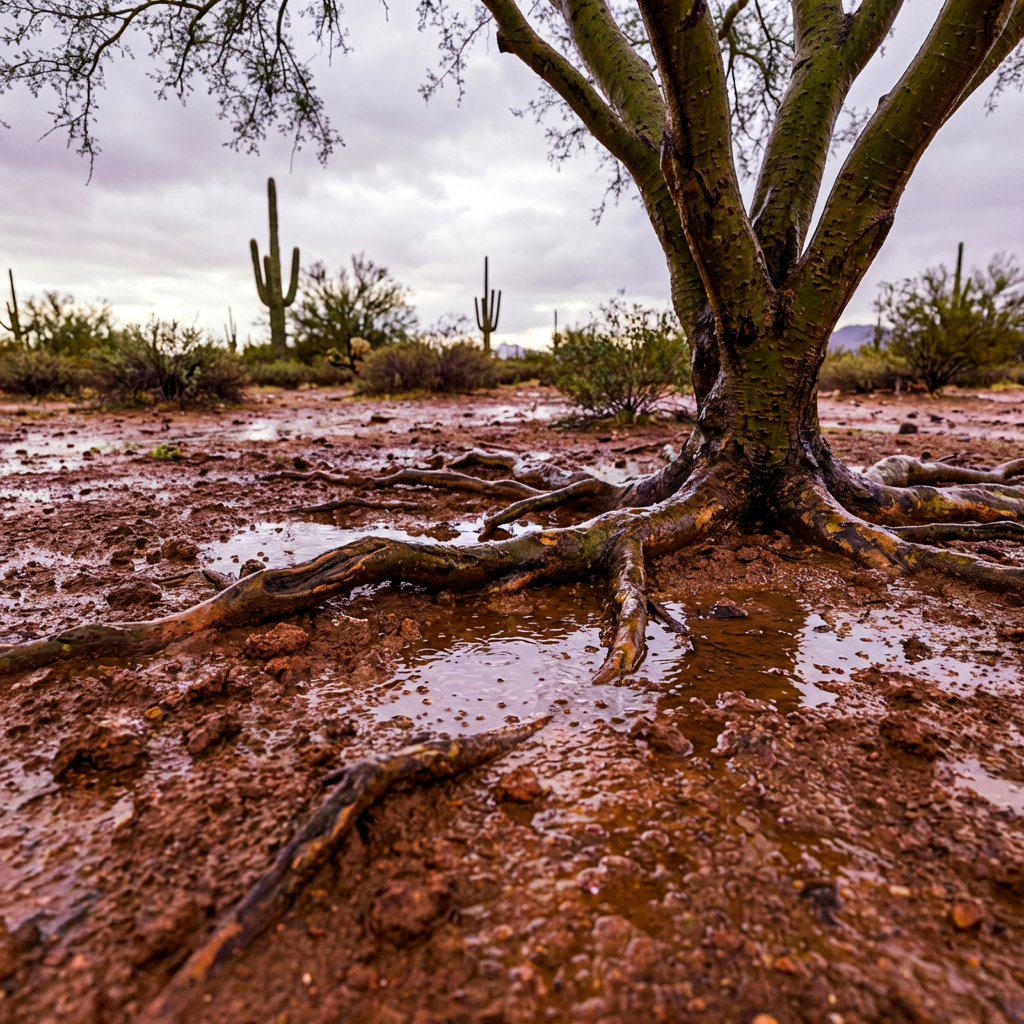
Winter rain in Arizona softens hard desert soil significantly. Soft soil allows pests to move through the ground easily. Root-feeding pests travel through moist soil to reach tree roots.
Soft soil creates ideal conditions for pest movement and activity. Pests burrow deeper into the soil to find tree roots. Moist conditions help pests survive and multiply faster.
Soft soil also weakens the tree’s root anchoring in the ground. Trees become unstable when roots cannot grip the soil firmly. Weakened trees fall over more easily during windstorms.
Excess moisture in soft soil promotes root rot and disease. Trees already stressed by pests face additional disease problems. Combined stress from pests and disease kills trees faster.
Soft soil allows water to pool around tree bases. Pooled water suffocates roots and creates rot conditions. Trees weaken further when roots cannot absorb oxygen.
Proper drainage prevents soft soil problems around trees. You can improve drainage by adding mulch and improving the soil. Professional arborists help you manage soil conditions properly.
How to Protect Your Trees from Pests
Water trees deeply before winter arrives each year. Well-watered trees resist pest damage much better than dry ones. Deep watering in fall prepares trees for winter dormancy.
Prune dead branches and weak wood from trees regularly. Dead branches attract pests seeking easy targets for food. Pruning removes pest habitat and improves tree health.
Inspect trees monthly for pest signs and damage. Early detection stops infestations quickly before they spread. Regular monitoring prevents serious pest problems from developing.
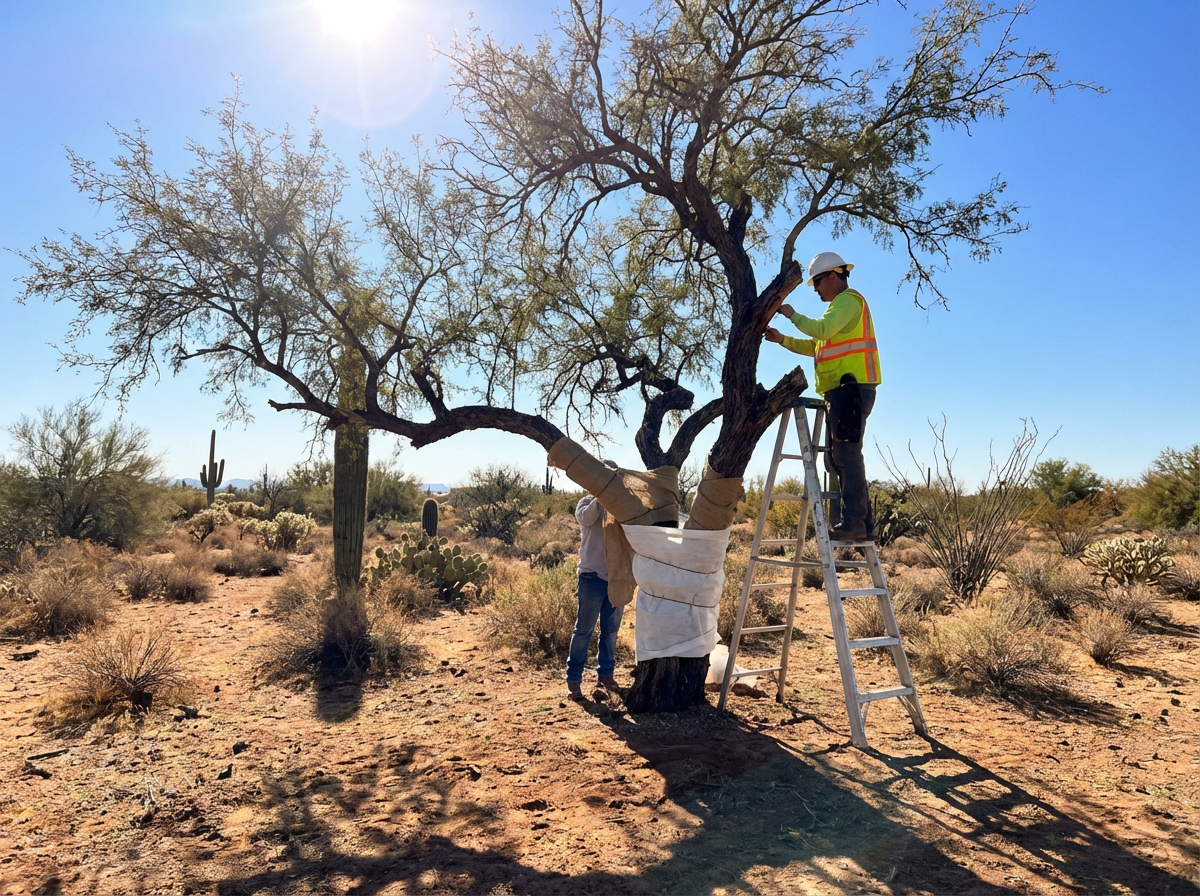
Apply protective tree wrap to young tree trunks. White tree wrap reflects sunlight and prevents bark damage. Remove wraps in spring to avoid moisture and pest problems.
Keep mulch away from tree trunks by several inches. Mulch against bark creates pest habitat and moisture problems. Proper mulching protects roots without attracting pests.
Avoid injuring trees with equipment or vehicles. Damage creates entry points for pests and disease. Protect tree root zones from foot traffic and harm.
Prevention Steps You Can Take Now
Select cold-hardy tree species appropriate for Arizona. Research temperature tolerance before purchasing new trees. Native species handle Arizona winters better than exotic imports.
Plant trees in protected locations away from harsh winds. Buildings and walls provide natural windbreaks for young trees. Southern exposures receive more warming sunlight during winter.
Establish proper watering routines before winter arrives. Well-hydrated trees withstand cold stress better than dry ones. Adjust watering frequency based on rainfall and soil type.
Monitor weather forecasts and prepare for cold snaps. Cover vulnerable trees before temperatures drop using frost cloth. Proactive protection prevents damage better than reactive treatments.
Prune trees properly during the growing season to improve structure. Well-structured trees withstand cold and wind damage better. Professional pruning creates strong branch angles that resist damage.
Avoid excessive nitrogen fertilization in fall months. New growth is more susceptible to frost damage. Fall fertilization should focus on potassium to harden tissues.
Professional Pest Treatment Options
Insecticide sprays cover tree foliage and branches effectively. These treatments kill pests on contact with insects. Sprays work best for pests on outer tree surfaces.
We use safe products that protect your family. Sprays break down quickly in the environment. Multiple applications may be needed for complete control.
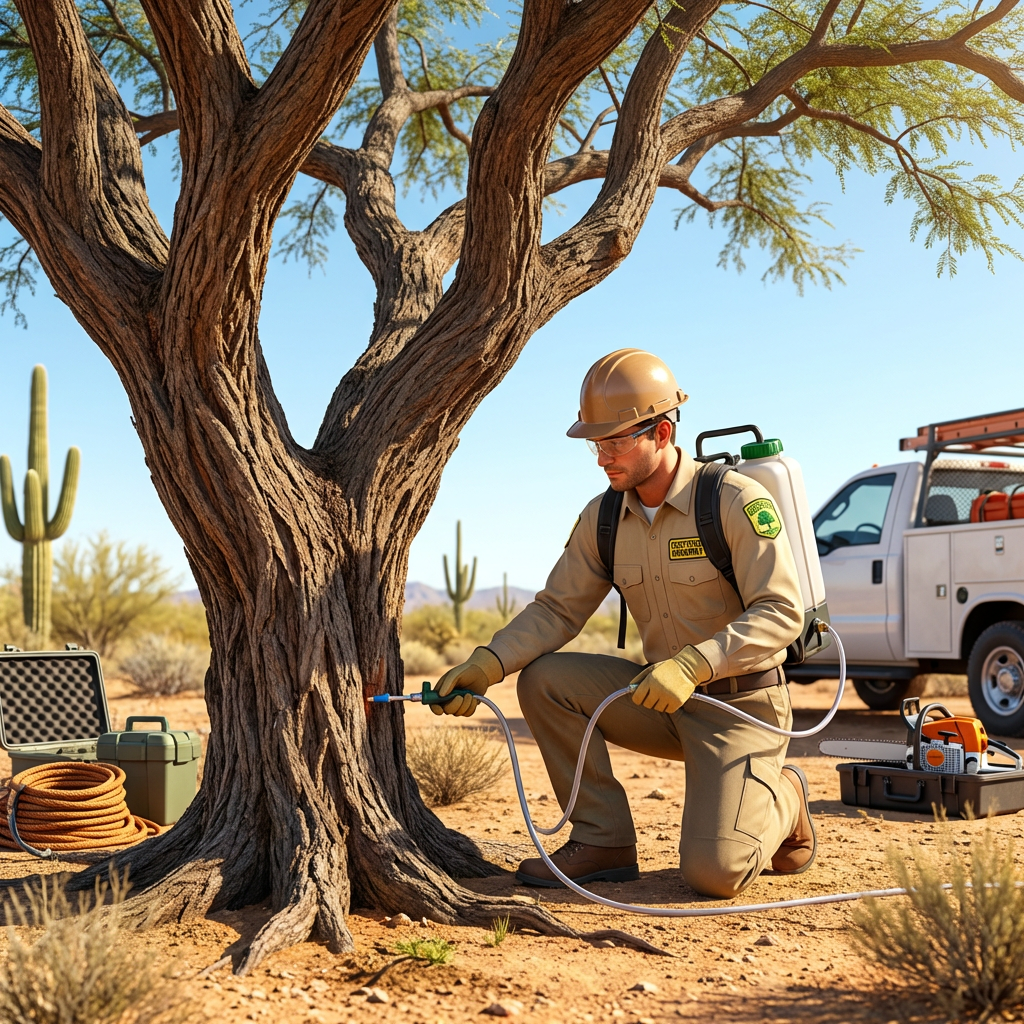
Trunk injections deliver treatment directly into the tree’s vascular systems. This method protects trees for months with a single application. Injections work well for bark beetles and borers.
Injections reach pests inside trees where sprays cannot. This method is very effective for serious infestations. A professional application ensures proper treatment depth and dosage.
Soil treatments are absorbed by tree roots effectively. Trees distribute treatment throughout their system naturally. This method protects trees from root-feeding pests.
Soil treatments prevent pest problems before they start. Regular applications keep trees protected year-round. This preventive approach saves money long-term.
When to Call an Expert Arborist
Large branches hanging dangerously require immediate professional attention. Unstable trees threaten property and people during wind events. Never attempt to remove large limbs yourself without training.
Extensive bark splitting indicates serious structural damage inside. Professionals assess whether trees can recover or need removal. Early intervention prevents complete tree failure and damage.
Widespread dieback affecting more than thirty percent of the canopy needs assessment. Severe damage often exceeds homeowner treatment capabilities. Arborists determine if trees can be saved or removed.
Uncertainty about tree health or appropriate treatment matters greatly. Professional diagnosis prevents mistakes that worsen tree conditions. Expert advice saves time, money, and trees.
Trees near structures, power lines, or high-traffic areas need care. Professional care ensures safety while protecting your investment. Certified arborists carry insurance and follow safety standards.
Multiple trees showing similar damage suggest environmental problems. Professional assessment identifies root causes affecting your landscape. Comprehensive solutions address underlying problems affecting trees.
FAQs
Q. How do I know if my tree has winter pests?
Look for small holes in bark, sawdust around the base, or branches dying without an obvious reason. Discolored foliage and canopy thinning indicate pest problems. Call us for a professional inspection if you notice these signs. We identify pests and recommend treatment quickly and affordably.
Q. Are pest treatments safe for my family and pets?
Yes, we use safe products applied by professionals only. Treatments break down quickly in the environment. We keep families away from treated areas during application. All products meet safety standards for residential use and families.
Q. How long does pest treatment take to work on trees?
Results vary by pest type and treatment method used. Some treatments work within days while others take weeks. We monitor trees and adjust treatment if needed. Most infestations show improvement within two weeks of treatment.
Protect Your Trees This Winter
Don’t wait until pests destroy your trees completely. Winter is the perfect time to treat pest problems. Early treatment prevents spring infestations from becoming serious.
Branch Management Tree Service protects Arizona trees from pests year-round. Our certified arborists provide expert diagnosis and treatment. We save trees and protect your landscape investment.
Schedule your free pest inspection today with our team. We identify problems and recommend solutions quickly. Professional pest control keeps your trees healthy and strong.
Your trees deserve protection from winter pests and damage. We provide the expertise and service you need. Let us help your trees thrive through every season.
Start Your Tree Protection Today
Call Branch Management Tree Service at 480-970-1315 now.
Visit aztreedoctor.com to learn more about our pest control services.
Your trees deserve expert care from Arizona’s trusted tree professionals. We provide inspections, treatment, prevention, and emergency services. Let us help your trees thrive through every season ahead.
Services We Provide
Branch Management Tree Service offers complete pest control solutions:
Pest Inspection & Diagnosis – Identify pests and damage level
Insecticide Treatments – Spray applications for surface pests
Tree Health Care – Strengthening trees to resist pests
Call 480-970-1315 for professional pest control in Scottsdale and Phoenix.
Tags
winter tree pests, Arizona tree care, pest prevention
Comments are closed