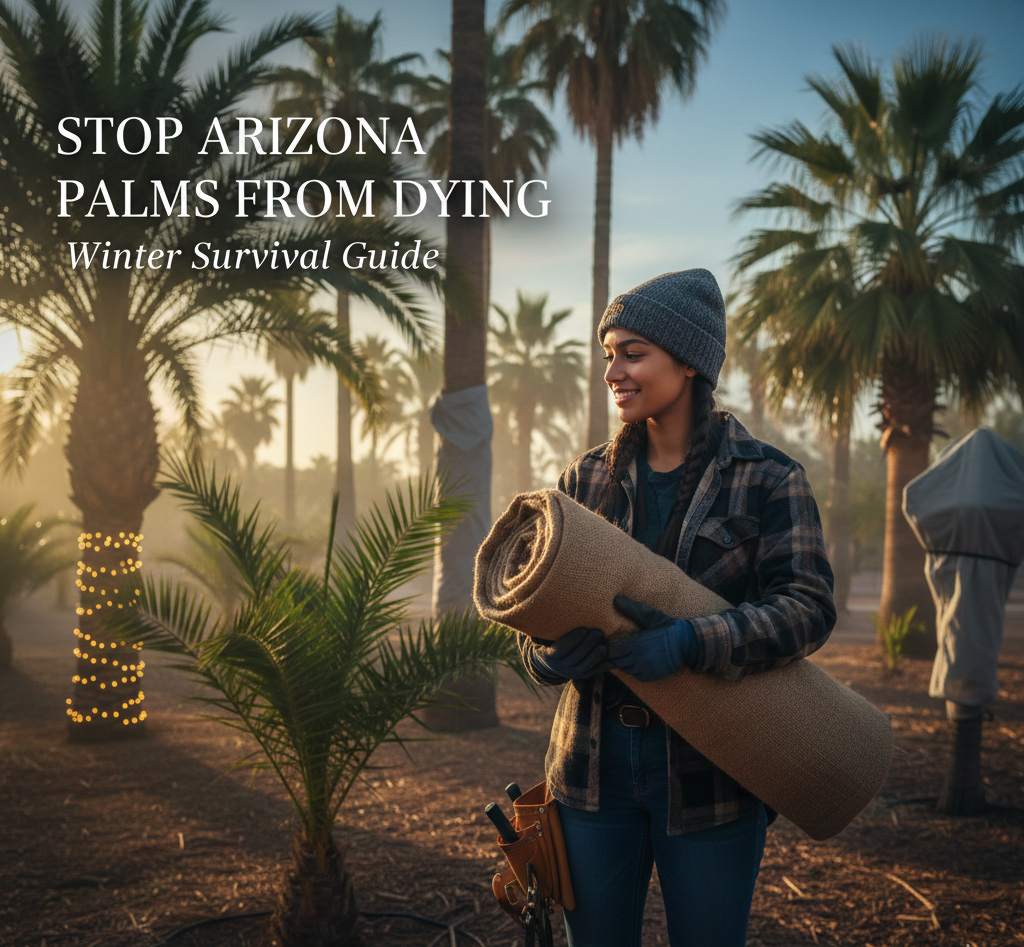
Protect your Arizona palms this winter. Learn expert tips on watering, pruning, and frost protection to keep your landscape lush and healthy.
Table of Contents
1. Understanding Arizona’s Winter Impact on Palms
2. Identifying Cold-Sensitive Palm Species
3. The Importance of Proper Winter Watering
4. Frost Protection Techniques for Success
5. Pruning Pitfalls: What to Avoid in Winter
6. Nutrient Management During Dormancy
7. Recognizing Signs of Winter Stress Early
8. Recovering Your Palm After a Freeze
9. Professional Maintenance vs. DIY Care
10. Conclusion
11. FAQs
Understanding Arizona’s Winter Impact on Palms
Arizona winters can be surprisingly harsh for tropical palms. Sudden frost and freezing temperatures often cause irreversible damage. This guide helps you protect your investment and maintain a beautiful desert landscape.
Arizona nights can get very cold, very fast. When the temperature drops below freezing, it shocks your palms. This sudden cold traps water inside the tree’s trunk.
When this water turns into ice, it expands. This growth breaks the tiny cells inside the tree. That is why you see the leaves turning brown.
Most palms love the heat and sunshine. They do not have a way to fight the cold. When the sap inside freezes, the tree cannot move food.
The most important part is the “heart” of the palm. This is at the very top where new leaves grow. If the heart freezes, the tree might die forever.
Cold winds also dry out the green fronds quickly. This makes the edges of the leaves look burnt or crispy. You might not see this damage for a few weeks.
Even the soil temperature matters for your tree’s health. If the ground is too cold, roots cannot drink water. This makes the palm weak and very thirsty during winter.
Young palms are like babies and need extra care. Their trunks are thin and cannot stay warm by themselves. Older trees are stronger but still need your help.
Knowing how the cold hurts trees helps you prepare. You can save your beautiful landscape with just a little work. Simple steps today can prevent big problems tomorrow.
Our team at AZ Tree Doctor knows exactly how to help. We check your trees to make sure they are safe. Let us help you keep your palms green and healthy.
Want to keep your palms safe this winter? Contact AZ Tree Doctor Today.

Identifying Cold Sensitive Palm Species
Not all palm trees handle the Arizona cold the same way. Some species love the desert, while others really struggle here. You need to know which palms are in your yard.
Queen Palms are very popular but hate the freezing cold. They come from warm, humid places like South America. A single frosty night can turn their green fronds brown.
Pygmy Date Palms are also very sensitive to low temperatures. These small trees often live in pots or near pools. They need extra blankets when the weather forecast predicts a freeze.
The Sago Palm is another plant that dislikes the winter chill. Even though it looks tough, its leaves yellow very quickly. You must protect the center to keep it growing well.
Mexican Fan Palms are much tougher than the tropical types. They can stand the cold better because they fit our climate. However, young fan palms still need help during their first years.
Identifying your tree is the first step to saving it. Look at the trunk shape and the style of the leaves. Each species needs a different level of winter protection and care.
If you are unsure, you can ask a professional for help. We can tell you exactly which trees are at high risk. Knowing your species helps you plan your winter garden chores.
A little bit of knowledge goes a long way for homeowners. You can save money by protecting the right trees at the right time. Don’t wait until the leaves fall off to take action.
Our experts at AZ Tree Doctor can identify every tree you own. We create a custom plan to keep your specific species alive. We want your yard to stay beautiful all year long.
Do you know which palms in your yard are at risk? Ask AZ Tree Doctor for an Expert Review!
The Importance of Proper Winter Watering
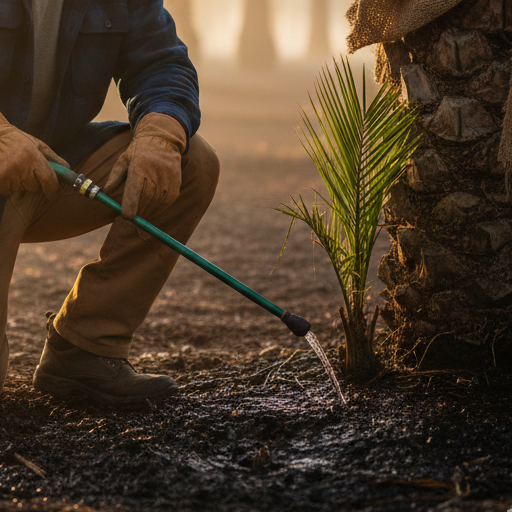
Dry soil freezes much faster than moist, healthy soil. You should water your palms deeply before a predicted freeze. Moist soil acts as an insulator for the root system.
Frost Protection Techniques for Success
Protecting your palms from frost is like giving them a warm coat. You need the right materials to keep the freezing air away. Using the wrong covers can actually hurt your trees more.
Burlap is a great choice for wrapping your palm trees. Frost blankets also work well because they let the plant breathe. These materials create a safe barrier against the biting cold.
Focus most of your energy on the center spear of the tree. This is the growth point where new leaves start their life. Wrap this area carefully to keep the “heart” of the palm warm.
Never use plastic sheets that touch the green leaves directly. Plastic traps moisture and can cause ice to freeze onto the plant. This often leads to severe burns on the delicate fronds.
Cardboard boxes can work well for smaller, shorter palm species. Simply place the box over the plant during the coldest nights. Remove the box during the day so the plant gets sun.
Twinkle lights or C9 holiday bulbs can add extra warmth too. Wrap them around the trunk before you put the blanket on. The small amount of heat keeps the temperature just right.
Always secure your blankets with strong tape or heavy garden twine. Arizona winds can be quite strong during a winter storm. You don’t want your protection blowing away in the night.
Remember to take the covers off once the sun comes out. Trees still need fresh air and sunlight to stay healthy. Check the local weather report every evening for any freeze warnings.
If wrapping trees seems too difficult, give us a call today. The **AZ Tree Doctor** team has all the right tools for the job. We can protect your tall palms safely and very quickly.
Is your yard ready for the next big freeze?
Let AZ Tree Doctor Protect Your Palms
Pruning Pitfalls: What to Avoid in Winter
Many people want to trim brown leaves as soon as they appear. They think cleaning the tree helps it look much better. However, pruning too early in winter is a big mistake.
Those brown, dead-looking fronds actually serve a very important purpose. They act like a natural blanket for the rest of the tree. They shield the delicate inner trunk from the biting cold winds.
If you cut them off, you expose the tree’s heart to frost. This makes it much easier for the next freeze to kill it. Keep your pruning shears in the garage until the weather warms.
Winter is the time when your palm trees rest and move slowly. Cutting live or even dead wood stresses the plant out significantly. Let the tree keep its energy for surviving the cold nights.
You should wait until the very last frost has totally passed. In Arizona, this usually means waiting until March or even April. Your patience will reward you with a much healthier palm tree.
When you prune in winter, you create open wounds on the tree. These wounds do not heal quickly because the tree is dormant. Bacteria and fungus can easily enter these spots and cause rot.
Avoid the “hurricane cut” where people trim almost every single leaf. This style weakens the palm and makes it struggle in the wind. Always leave a full, rounded canopy to protect the center crown.
If your tree looks messy, just try to ignore it for now. Safety and health are more important than a perfect look today. Your palm will grow beautiful new green leaves very soon.
Our team at AZ Tree Doctor knows the perfect time to prune. We can help you decide which leaves are safe to remove later. Trust our experts to keep your desert landscape in top shape.
Are you tempted to trim your brown palm leaves right now? Talk to AZ Tree Doctor Before You Cut.
Nutrient Management During Dormancy
Palm trees grow very slowly during the chilly winter months. They enter a deep resting stage called dormancy to save energy. Adding heavy food now won’t help them grow any faster.
Stop using high nitrogen fertilizers when the temperature starts to drop. The tree cannot process these nutrients while the soil is cold. Extra chemicals can actually sit in the soil and burn the roots.
Focus your energy on keeping the soil healthy and balanced instead. Check the pH levels to make sure the dirt stays tree-friendly. Good soil health helps the roots survive the harsh winter nights.
Drainage is another big factor for your palm’s winter survival. Make sure water does not puddle or sit around the tree’s base. Soggy roots can rot quickly when the weather is cold and damp.
You can add a thin layer of organic mulch around the trunk. Mulch acts like a warm blanket for the underground root system. It also breaks down slowly to provide light, natural nutrients later.
Wait for the warm Arizona sun to return in the spring. Once the ground feels warm, your palm will wake up hungry. That is the perfect time to start a regular feeding schedule.
Feeding a dormant tree is like waking someone up from a nap. It confuses the plant and forces it to grow too early. This new growth is very soft and dies instantly in a freeze.
Keep your gardening routine simple and easy during the winter break. Your palms just need a stable environment and a little bit of peace. Let them rest now so they can thrive in the summer.
If you are worried about your soil, call **AZ Tree Doctor** today. We can test your ground and fix any drainage problems quickly. We make sure your trees have the best foundation for growth.
Not sure if your soil is healthy enough for the winter? Let AZ Tree Doctor Check Your Trees Today.
Recognizing Signs of Winter Stress Early
You need to watch your palm trees closely during the winter. Checking them once a week can save their lives. Early warning signs are often very subtle but quite important.
Look for fronds that start to droop or hang unusually low. Healthy leaves should feel firm and stand up quite strong. If they look tired and limp, the cold is likely winning.
Check the leaves for any dark or water-soaked looking spots. These patches usually mean the plant cells have already frozen and burst. These spots might turn black or a deep, ugly brown later.
Pay very close attention to the center spear of the palm. This is the very top point where new growth begins. Gently tug on it to see if it feels solid or loose.
If the center spear feels mushy or soft, you have a problem. This often points to “bud rot” caused by freezing moisture. You must treat this immediately to stop the entire tree from dying.
Sometimes you will see a white or gray fuzzy mold growing. This happens when the tree stays too wet during a cold snap. Clean air and less water can help stop this fungus fast.
Notice if the trunk shows any new cracks or oozing sap. Cold weather causes the wood to shrink and expand very quickly. These cracks can let pests inside the tree during the spring.
Catching these problems early allows you to take fast action. You can adjust your covers or change your watering schedule. Small changes today prevent your tree from becoming a total loss.
Our experts at AZ Tree Doctor can spot these signs instantly. We know exactly what a stressed Arizona palm looks like. Let us inspect your trees to give you peace of mind.
Do your palms look a little bit stressed or tired? Contact AZ Tree Doctor for a Professional Health Check.

Recovering Your Palm After a Freeze
Patience is your best friend after a big Arizona freeze. Do not rush to cut everything off the very next day. Your palm needs time to show you it is still alive.
Apply a copper-based fungicide to the center of the tree. This special spray prevents “heart rot” from killing the growth point. It protects the palm while it tries to heal from the cold.
Wait for the warm sun to bring out some new green growth. You might see a small green leaf poking out by mid-spring. This is the best sign that your tree survived the winter.
Avoid removing any brown or damaged leaves too early in the year. These ugly fronds still protect the trunk from late-season cold snaps. They act like a shield until the weather stays warm for good.
Water your tree gently but consistently during the recovery phase. Do not overwater the soil while the tree is still weak. Just keep the ground moist enough to help the roots wake up.
Do not use heavy fertilizers right after a bad freeze event. Forcing growth too fast can stress the tree’s internal systems. Let the palm recover its strength at its own natural pace.
Check the center spear every week to see if it stays firm. If it stays strong, your palm has a very good chance. If it falls out, the tree might need more serious professional help.
Every palm tree recovers differently depending on its age and health. Some might bounce back fast while others take many months. Stay positive and give your desert landscape some much-needed love.
If you are worried about a dead tree, call **AZ Tree Doctor**. We can tell if your palm is coming back or gone. Our team helps save trees that look like they have no hope.
Does your palm tree look dead after the last cold night? Let AZ Tree Doctor Save Your Landscape Today.
Professional Maintenance vs. DIY Care
Taking care of palms yourself can seem like a simple task. You might think a ladder and some shears are enough. However, Arizona palms need very specific expert care to survive.
Expert arborists truly understand the unique Phoenix and Tucson climates. We know exactly how the desert heat and cold affect trees. Our team tracks local weather patterns to protect your property.
We use professional-grade tools to ensure your trees stay safe. High ladders and specialized saws allow us to reach every branch. We handle the dangerous heights so you can stay on the ground.
Hiring a professional actually saves you a lot of money later. Replacing a dead, mature palm tree is very expensive today. Regular maintenance prevents these high costs from ever happening to you.
We also know the right way to apply winter treatments. Using too much chemical or the wrong wrap can hurt the tree. We provide the perfect balance of care for every single species.
Our team spots hidden problems that most homeowners might miss easily. We look for tiny pests and early signs of trunk rot. Solving these small issues now prevents a total tree collapse.
DIY care often leads to over-pruning or “hurricane cuts” by mistake. These errors make your palms much weaker against the winter frost. We keep the canopy thick and healthy to provide natural warmth.
Your time is valuable and gardening can take all weekend. Let us handle the hard work while you relax and enjoy. A beautiful, professional yard adds great value to your Arizona home.
The AZ Tree Doctor team is ready to help you right now. We bring years of experience to every backyard we visit. Trust the experts to keep your desert landscape looking its best.
Do you want the best care for your beautiful palm trees? Schedule a Visit from AZ Tree Doctor Now.
Conclusion
Winter survival requires preparation, timing, and the right knowledge. Protect your palms now to enjoy their shade all summer. Your landscape defines the beauty of your Arizona home.
FAQs
Q. Should I cut off brown palm fronds in January?
No, you should leave brown fronds on the tree. They protect the heart of the palm from further frost. Wait until March to begin your seasonal pruning.
Q. How often should I water my palms in the winter?
Reduce your frequency but keep the sessions deep and thorough. Aim for once every two to three weeks depending on rain. Always check the soil moisture levels before adding more water.
Q. Will a frozen palm tree grow back?
Most palms recover if the center spear remains firm. If the center pulls out easily, the tree might be dead. Professional inspection can determine the exact health of your palm.
Why Choose AZ Tree Doctor?
Don’t let the Arizona winter kill your beautiful palms. Our team specializes in desert tree health and emergency frost recovery. We provide tailored solutions to keep your backyard looking like a paradise.
Ready to protect your landscape?
Call us now to schedule your winter health check up and ensure your palms thrive.
Tags
Arizona Palm Care, Winter Tree Protection, AZ Tree Doctor
Comments are closed